



How to Play Plinko Smart: A Practical Strategy Guide for Aussie Players 2026
Here's the honest starting point: no strategy makes Plinko a profitable game long-term. The house has a small but consistent edge built into the RTP — at the best available variant (BGaming Plinko XY with 99% RTP), that edge is 1%. No betting pattern changes this. What strategy does do is give a session some shape and structure — helping players stay in control of how much they spend, make intentional choices about risk versus reward, and avoid the classic trap of impulsive decisions after a bad run. This guide focuses on what actually matters: how risk levels and row counts affect sessions, which betting approaches are worth considering (and which aren't), and how to set up autobet so it works for players rather than against them. 18+ only. Gamble responsibly. Plinko is a game of chance — strategy can't guarantee wins. Gambling Help Online: 1800 858 858.
Before Any Strategy: What Plinko Actually Does
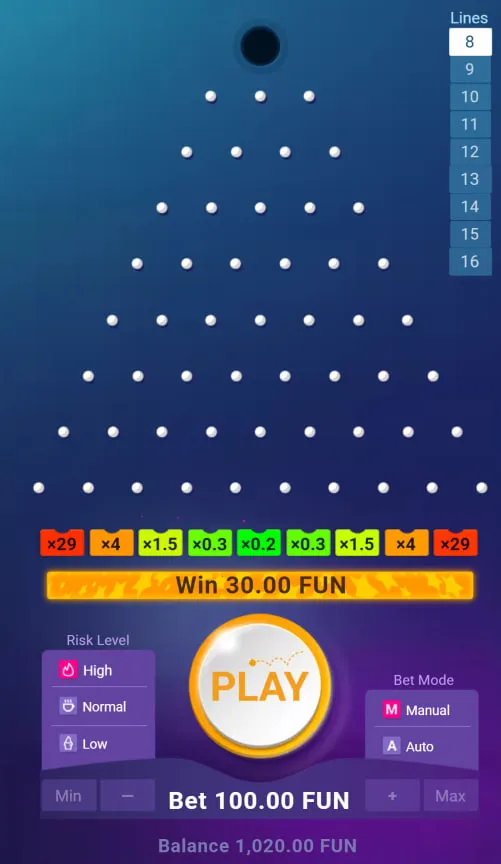
Every ball drop is random. Fully random. The ball has no memory of previous drops, there's no cycle to predict, and no pattern to exploit. BGaming's Plinko uses a Provably Fair algorithm — the result of each drop is cryptographically committed before the ball falls, making it mathematically impossible for the casino to manipulate the outcome. RNG-certified casinos (like Joe Fortune and SkyCrown) use third-party audited random systems with the same result: unpredictable, independent outcomes every time.
Strategy works on what can be controlled — risk level, row count, bet size, and stop-loss settings — not on predicting where the ball goes.
The Most Important Decision: Risk Level and Rows
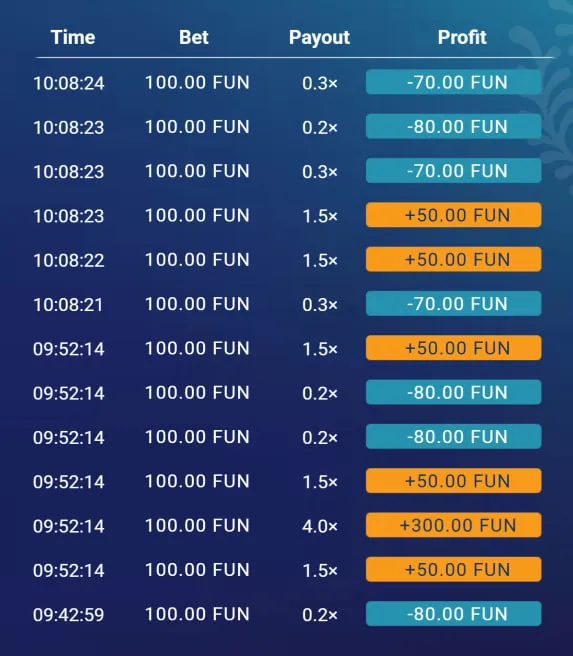
These two settings shape every session. Here are the actual multiplier ranges at each combination:
| Rows | Low Risk | Medium Risk | High Risk |
|---|---|---|---|
| 8 | 0.5× – 5.6× | 0.4× – 13× | 0.2× – 29× |
| 10 | 0.5× – 8.9× | 0.4× – 22× | 0.2× – 76× |
| 12 | 0.5× – 10× | 0.3× – 33× | 0.2× – 170× |
| 14 | 0.5× – 7.1× | 0.2× – 58× | 0.2× – 420× |
| 16 | 0.5× – 16× | 0.3× – 110× | 0.2× – 1,000× |
Which Setting Fits Which Player?
- Starting out with A$50 or less? Low risk, 8–10 rows. Frequent small wins keep the session going without burning through funds. The downside is smaller peak multipliers — but for a first session, keeping it fun and controlled matters more than chasing big numbers.
- Playing with A$100–A$300? Medium risk, 12 rows — this is the sweet spot that most experienced players settle on. Multipliers go up to 33× (genuinely exciting), the middle slots pay out regularly enough to sustain momentum, and the variance doesn't require a massive bankroll to weather.
- Playing with A$500+? High risk, 14–16 rows becomes viable. The 1,000× ceiling at High Risk 16 rows is real — but so is the reality that most drops come back below the original bet. A larger bankroll is needed to ride out the swings and still be playing when a big multiplier lands.
Four Betting Strategies — The Honest Version
1. Fixed Bet — The Recommended Approach for Most People
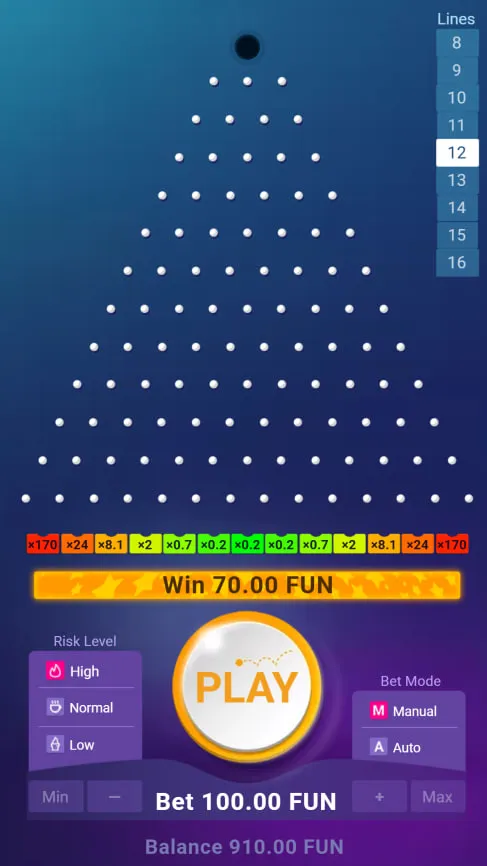
Same amount every single drop. Say A$2 per drop on a A$100 bankroll. It's boring, but it works. The session is predictable, stop-loss thresholds are easy to calculate, and there's no snowballing effect from a bad run. For anyone new to Plinko or anyone who's had a bad experience with escalating bets, this is the way to start.
2. Anti-Martingale — The Sensible Version of the Doubling System
Instead of doubling after losses (which can destroy a bankroll fast), Anti-Martingale does the opposite: increase bets after wins, reduce them after losses. It rides lucky streaks and limits damage on bad runs. Example: start at A$2, add A$1 per consecutive win up to A$6 max, drop back to A$2 after any loss. The key is setting that ceiling and actually sticking to it.
3. Martingale — The Strategy That Looks Good Until It Doesn't
Double the bet after every loss; reset after a win. The idea is that the first win recovers all previous losses. The problem: a A$2 starting bet becomes A$512 on round 8 of a losing streak. Under High Risk 16 rows, where sub-1× outcomes are common, a sequence like that is realistic. The strategy can produce quick profits in short sessions — but it can also produce catastrophic losses. Most experienced Plinko players have tried it once and moved on.
4. D'Alembert — A Gentler Alternative
Increase the bet by one unit after a loss, decrease by one unit after a win. Much less aggressive than Martingale. Example: start at A$2, go to A$3 after a loss, A$2 after a win. It won't recover losses as quickly as Martingale, but it also won't send the bet to A$512. A reasonable middle-ground for players who want some stake variation without the exponential risk.
How to Set Up Plinko Autobet So It Actually Protects the Bankroll

BGaming's autobet function is powerful — but it needs to be configured before starting, not adjusted mid-session when emotions are running high after a bad run.
- Set risk level and rows first — start with Medium, 12 rows unless there's a good reason to go elsewhere
- Set bet size at about 2% of the session budget — for a A$100 session, that's A$2 per drop
- Set the stop-loss at 30% of starting balance — if starting with A$100, stop autobet when the balance hits A$70
- Set an optional win target at 150% — stop at A$150 if starting with A$100, take the profit and exit
- Set the number of drops to 50 — that's the session checkpoint. After 50 drops, review and decide
- Start autobet and leave the settings alone — changing stop-loss mid-session is usually an emotional decision, not a strategic one
Can You Hit the 10,000× or 1,000× Multiplier? Here's the Truth
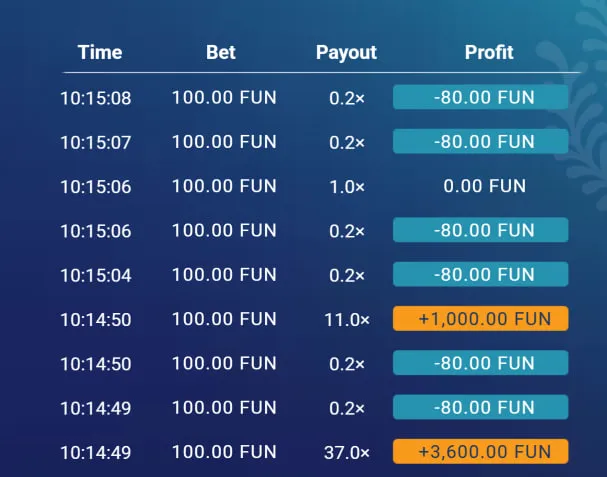
The 1,000× is available in Easter Plinko (BGaming) at High Risk 16 rows. The 10,000× is available in Plinko X (SmartSoft) at High Risk. Both of these are real, achievable payouts — they aren't tricks or display-only numbers. But:
- Reaching them requires the ball to land in the extreme edge slots at the bottom
- Under High Risk 16 rows, most outcomes are below 1× — meaning most drops lose money
- A session long enough to reasonably encounter a 1,000× outcome requires a bankroll large enough to absorb many sub-1× drops first
The practical advice: if the goal is to chase maximum multipliers, do it with High Risk at 14–16 rows on a bankroll of A$500+, with strict stop-loss settings. Don't chase a 1,000× outcome on a A$50 session — the bankroll won't last long enough.
The Casinos Where These Strategies Work Best
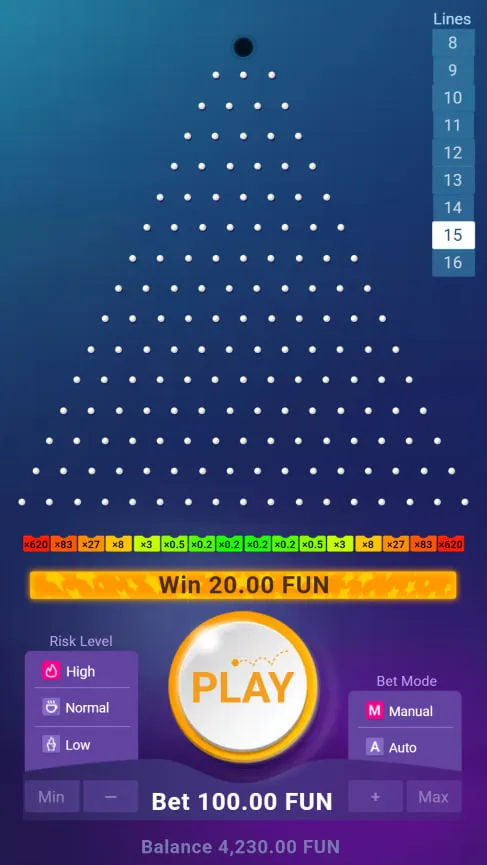
BGaming's Plinko (the Provably Fair version with RTP up to 99%) is available at these AU-accessible casinos:
- Joe Fortune — 9 Plinko variants including Easter Plinko. Up to A$5,000 + 450 FS welcome. Note: 50× wagering requirement.
- Neospin — BGaming Plinko XY (RTP 99%) + Plinko Rush. A$10,000 + 100 FS (code NEO100). Daily cashback 10–20%.
- SkyCrown — 5+ Plinko variants. Up to A$8,000 + 400 FS. 20 FS no-deposit on registration.
- Wazamba — 15% weekly cashback up to A$4,500. Note: Plinko only counts 10% toward bonus wagering.
- Gamblezen — 60 FS no-deposit (code: 60FSZEN). Welcome pack to $3,625. 30% weekly cashback.
18+ | T&Cs apply | Gamble responsibly
The Most Important Strategy of All: Knowing When to Stop

Setting a stop-loss and win target isn't just good strategy — it's how gambling stays enjoyable rather than stressful. A Plinko session should have a defined budget before starting and a clear exit point. Chasing losses after the stop-loss triggers is how small losses become large ones.
If the session is no longer fun, or the stakes feel uncomfortably high, that's the signal to stop — not to make one more drop to recover.
- Gambling Help Online: 1800 858 858 (free, 24/7)
- gamblinghelponline.org.au
- National self-exclusion (BetStop): betstop.com.au